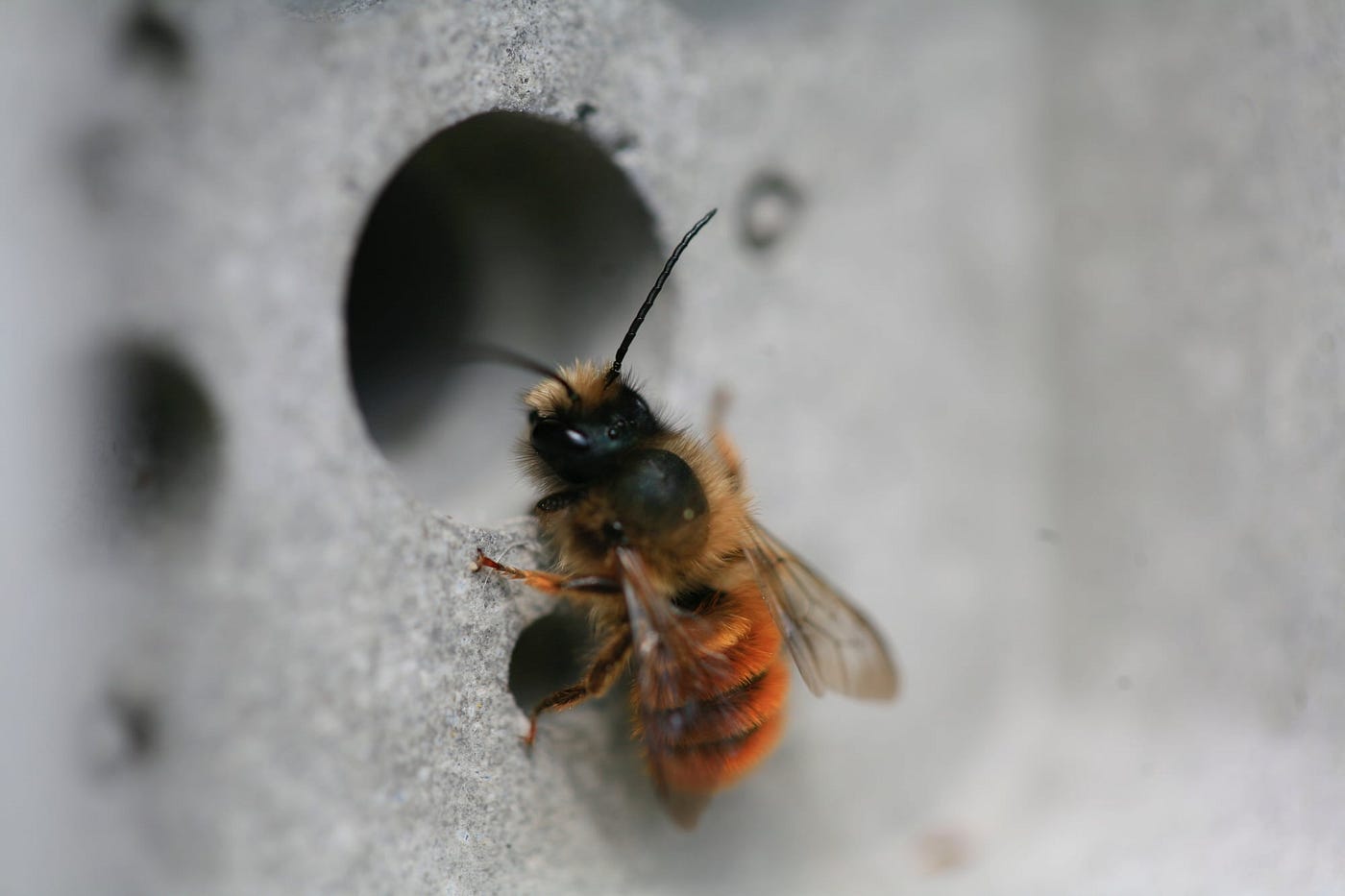
If I say the words “bee-home” most of you will automatically think of a hive but did you know that the majority species are solitary? Solitary bees don’t live in colonies, don’t have a queen and don’t produce honey, which makes them particularly under threat because most bee-friendly initiatives focus on honey bees. Green&Blue Studio have recently presented their latest innovation — an architectural brick with multiple holes that are intended to serve as homes for solitary bees.
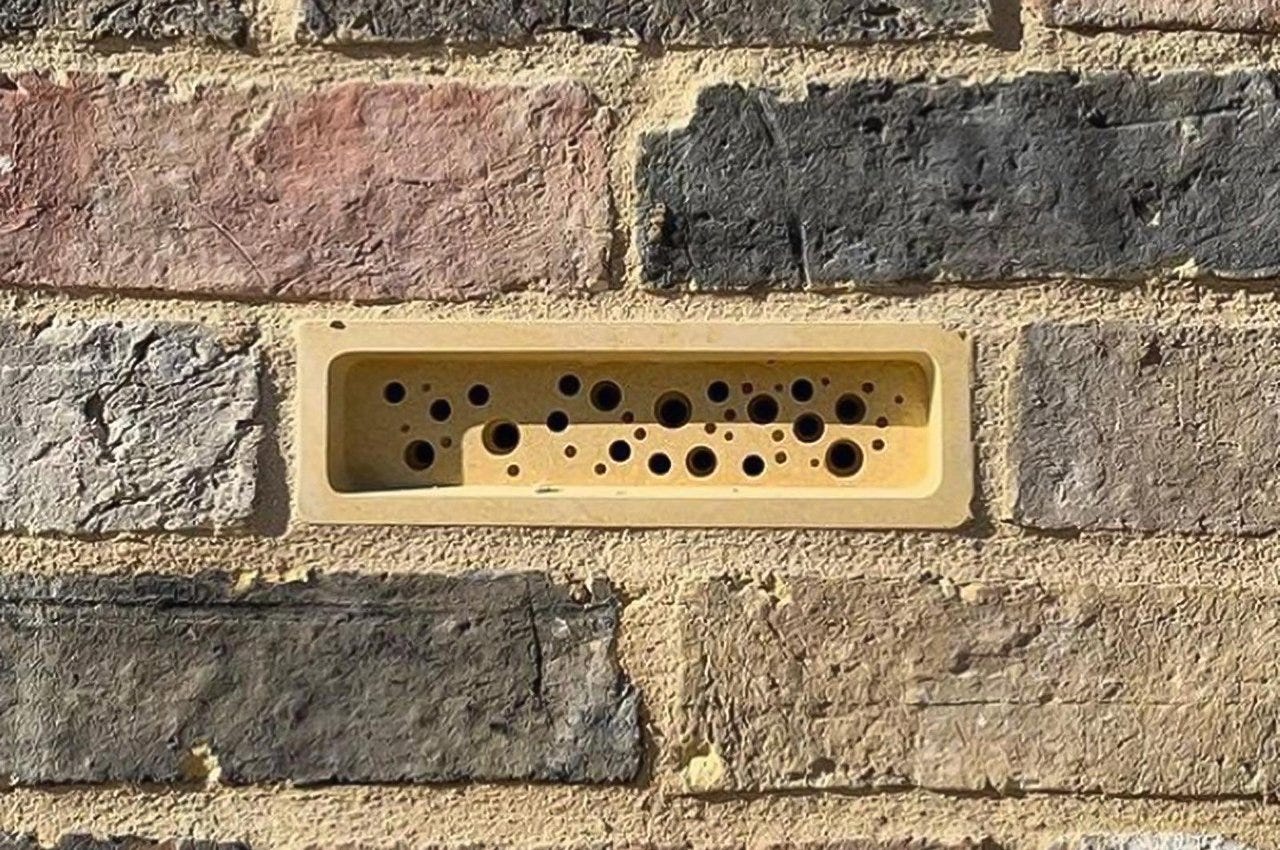
The brick is the same size as regular ones but it features openings of various sizes that offer cozy homes for our fellow bees. These small cavities have been designed with the help of experts, mimicking the holes solitary bees usually nest in, so that they find in this brick a place to lay their eggs in, sealing the entrance with mud or chewed-up vegetation. In addition, they are made out of 75% waste material from the local china clay industry, which makes the product a design statement for upcycling and urban regeneration all wrapped up into one perforated brick.

Solitary bees are the unsung hero of the pollinating species and Green&Blue Studio have brought us this tool that can help redress the balance of habitat loss we’ve creating for the fuzzy insects. Bees pollinate about one third of the food we eat, which makes them hugely important to us. Chris Hines, founder of Surfers Against Sewage, says “Every house build without a bee brick is a wasted opportunity” and Brighton and Hove will not waste any, as they’ve approved a planning law that calls for all new buildings above five meters to include bee bricks.
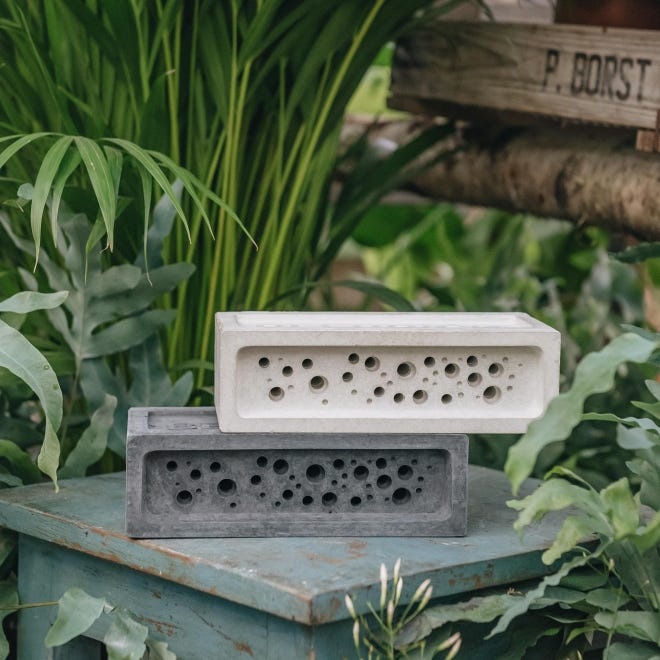
There is an ongoing debate about if these bricks actually provide adequate conditions for solitary bees to nest. Others say that these bricks alone are far from being a solution and call greenwashing. Robert Nemeth, who works both as a property developer and professional bee-keeper tells us “I’ve seen many great examples of solitary bees using the bricks and am won over to their potential”. Ecologists that have participated in the creation also warn about the importance of the brick being located near to a bee-friendly planting, as most solitary bees will only quest within one hundred meters of their nesting place. Could this mean that the winning combination might actually be bricks plus plants (plus eliminating harmful pesticides)?
The Brighton policy could be the perfect testbed for a larger study into the impact of the bee brick over an extended period of time so, I guess we’ll have to wait and see how the repopulation project develops, but it definitely is something to keep an eye on!
https://cdn.embedly.com/widgets/media.html?src=https%3A%2F%2Fwww.youtube.com%2Fembed%2F60TccXXeGLA%3Fstart%3D8%26feature%3Doembed%26start%3D8&display_name=YouTube&url=https%3A%2F%2Fwww.youtube.com%2Fwatch%3Fv%3D60TccXXeGLA&image=https%3A%2F%2Fi.ytimg.com%2Fvi%2F60TccXXeGLA%2Fhqdefault.jpg&key=a19fcc184b9711e1b4764040d3dc5c07&type=text%2Fhtml&schema=youtube