EE Residence

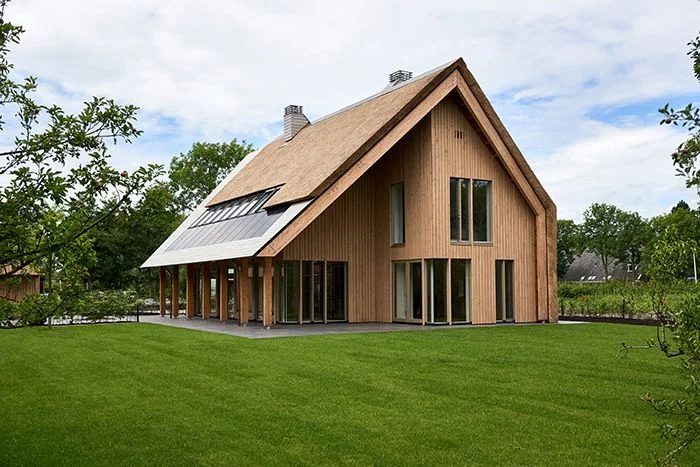
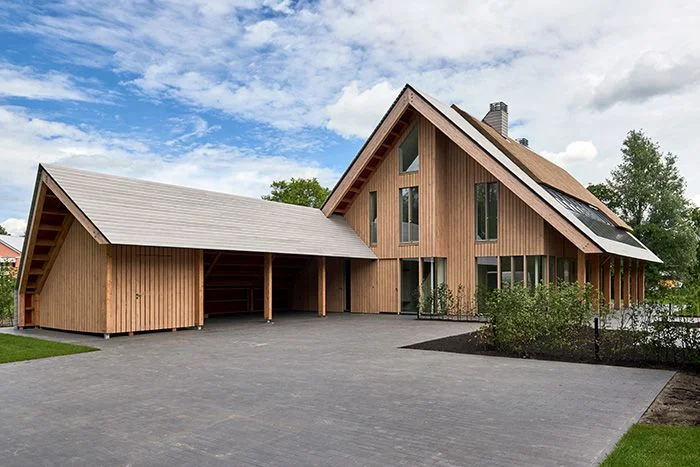
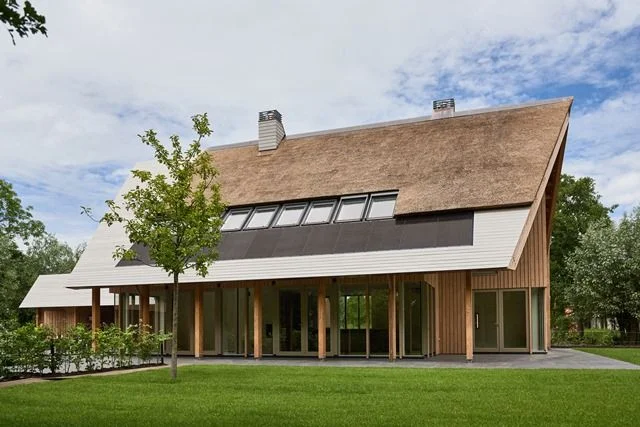
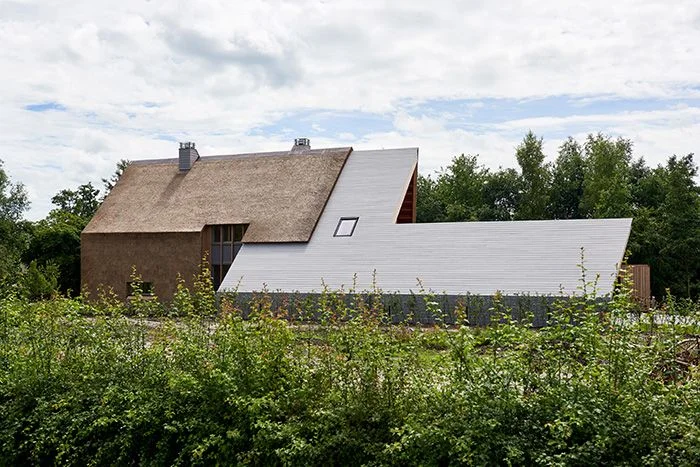
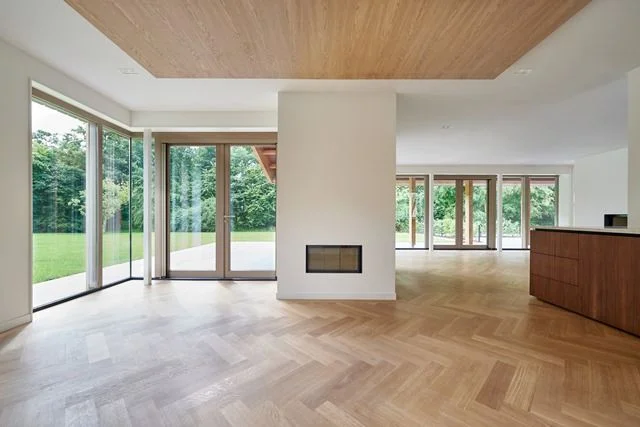
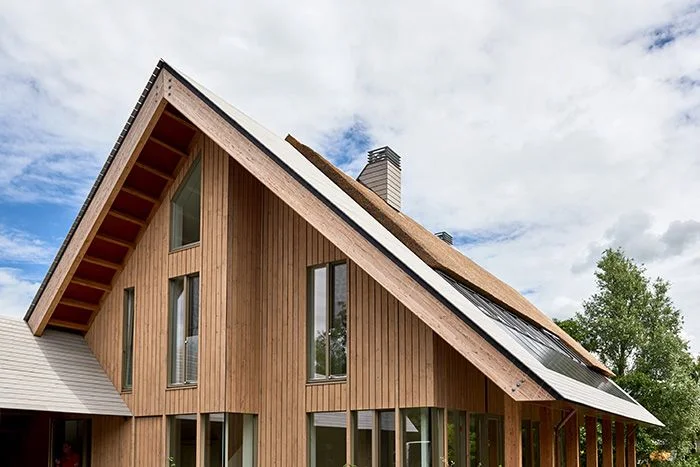
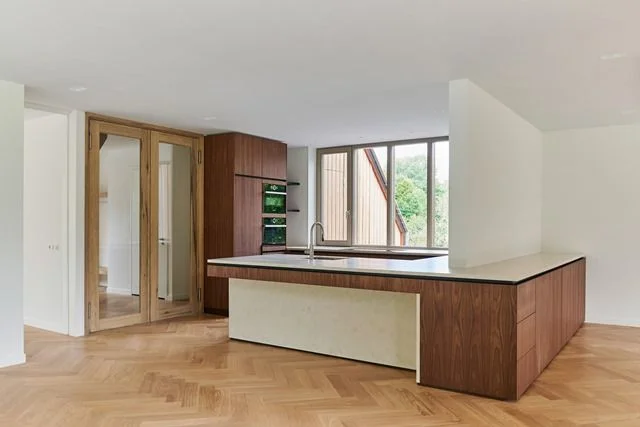
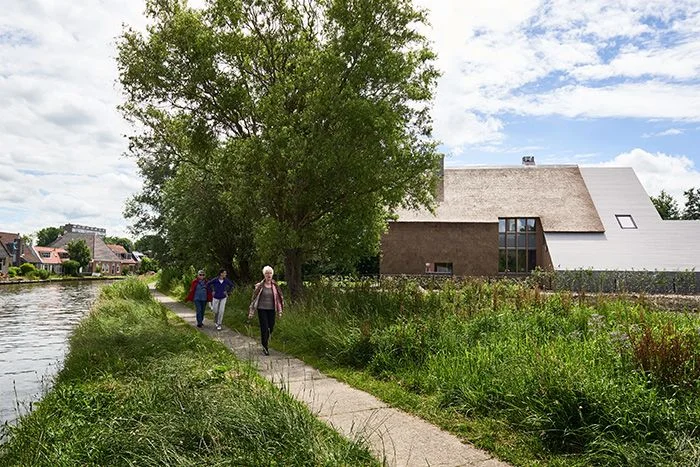
Located in the outskirts of the Frisian city Leeuwarden, near the river EE, we find the EE Residence. This energy-neutral house is the result of location-specific design, with shape and materials that evoke the typical Frisian farm barns. Local and durable materials have been used in order to reduce environmental impact, such as Frisian straw for the roof and dutch oak for the stairs and flooring. The large amount of glass of the south-facing veranda ensures optimal use of solar heat in winter and the overhangs offer protection and natural ventilation during the summer.

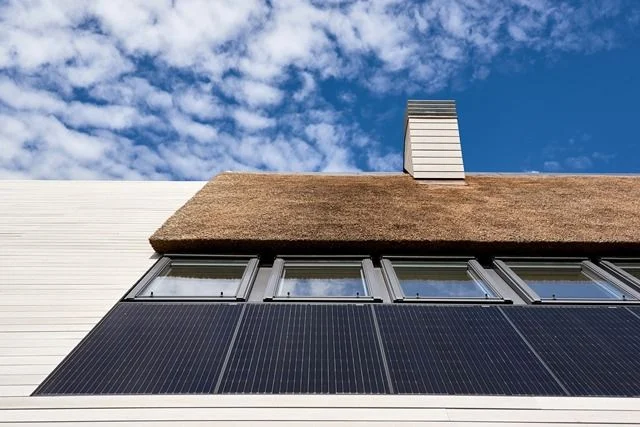
The north side of the house provides more privacy and greater protection to the microclimates that are usually created on this side of buildings. The roof follows function and enwraps the whole house like a blanket. You can also find solar panels sunk in it that cover the energy demand of EE Residence all year around.

This project is a great fusion between modern technologies that allow it to reach energy neutrality and ancestral shape and materiality that pay tribute to the forgotten craftsmanship in wood constructions.

Architecture: Achterbosch Architecten

Images: Ronald Zijlstra

Year: 2017

You may also like

Biophilic vs Green – What’s Different?

In recent years, there’s been a significant push towards creating built environments that respect and integrate with the natural world. Two prominent approaches within this movement are Biophilic Design and Green Design. While they both share a commitment to nature, they differ in their core focuses and approaches. Green Design, also known as eco-design, prioritizes sustainability. It aims to minimize the environmental impact of buildings and infrastructure by using renewable resources, improving energy efficiency, reducing waste, and avoiding pollution. The movement has made substantial strides, making technologies like

Read More »

4 Must-Haves for Great City Parks

We often see neighborhood parks as gifts to city residents, offering a breath of fresh air in the urban jungle. But let’s flip that perspective for a moment. What if it’s the parks that need us to bring them to life? This view aligns more with reality because parks thrive or fail based on how much people engage with them. And, what is it that parks need to get that engagement? In traditional city planning, open spaces are often treated like sacred objects, almost worshipped without much thought.

Read More »

Leave a Comment

Your email address will not be published. Required fields are marked *

Scroll to Top