Temperature rise all over the world is becoming increasingly urgent and the french architecture firm Arep was looking to address this problem. In large cities with hot climates, temperature records are broken every summer as they continue to rise year after year. And which are the resources an average citizen has to fight against unbearable heat? Our beloved AC system. So, this would be an accurate approximation of the current cycle urban societies are following:

To break with this wheel, a new approach towards cooling in cities needs to be devised. Arep architects took the opportunity of the Seoul Architecture and Urbanism Biennale 2021: Building the Resilient City to design an alternative cooling device that used neither non-renewable energy nor toxic refrigerants.
The architects took inspiration from Vietnam, a city that is being severely struck by climate change. Floods, typhoons, and droughts have been increasing in frequency during the past years. However, heat waves have been the most recurrent climatic events that Vietnamese cities have had to deal with lately. They are suffering from atmospheric pollution and temperature increase caused by AC systems, and this is making outdoor spaces unlivable, unbreathable, and overall making outdoor traditional Vietnamese lifestyle disappear. This situation inspired Arep to build a prototype of a low-tech, affordable bamboo cooling tower.

The tower sits as a hyperboloid shape for structural stability and it uses a very simple thermodynamic principle to cool the air: adiabatic cooling. When water is in contact with warm air, it evaporates. However, in order to change from liquid state to gas, it needs a little energy injection. This energy is extracted from the warm adjacent air and it results in a slight decrease of temperature. This is also the reason why patios with water fountains or gardens with pools feel cooler during the summer, because of the energy the water is absorbing from the environment to evaporate.
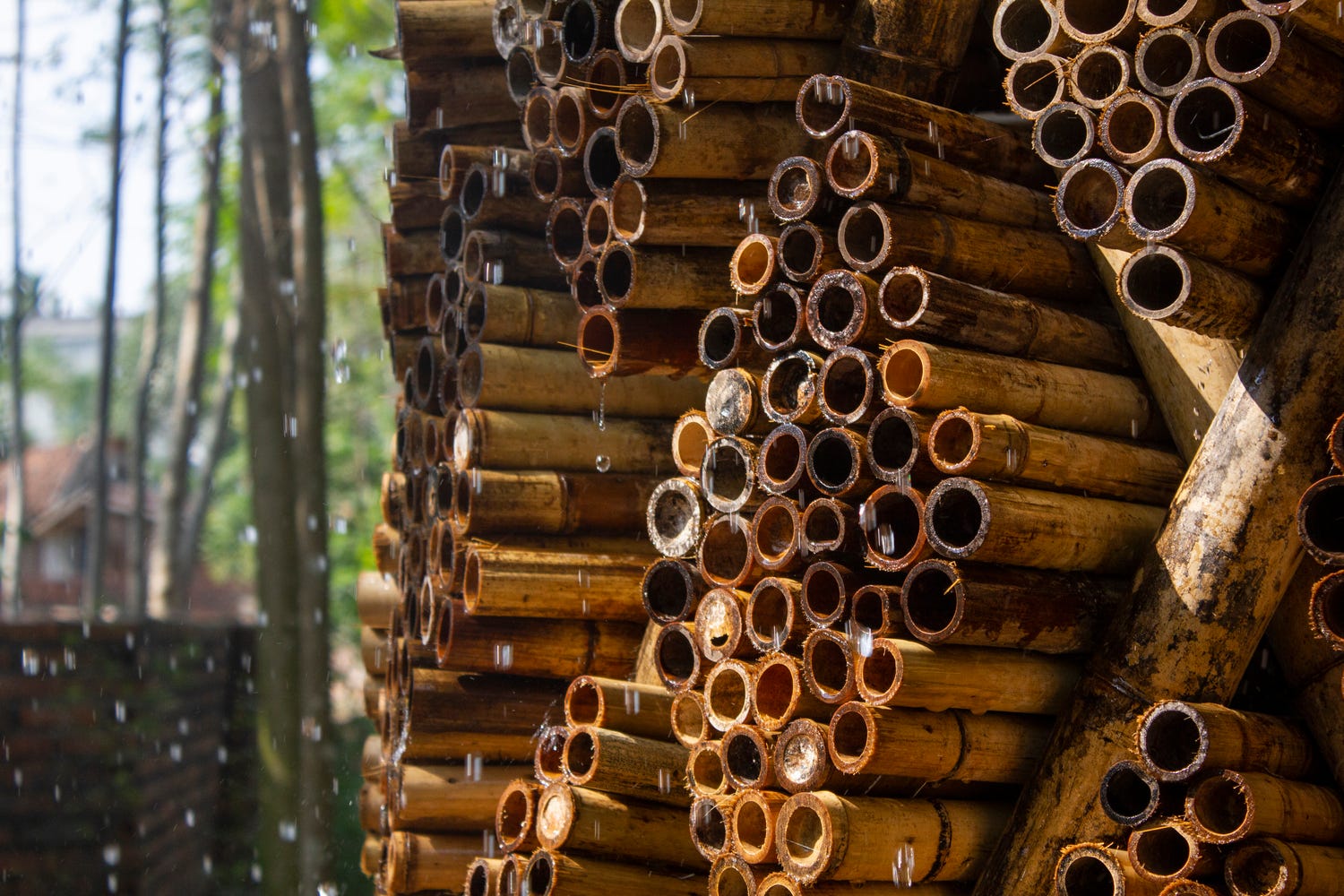
Water flows through the main bamboo pipes while a solar-powered fan captures the hot air from above the tower and pushes it down. As you can see in the image below, the air crosses the water currents twice (one when it enters the tower and another when it’s released back out), which allows for significant natural cooling of the air. The nifty way of integrating basic thermodynamics principles brings us a state-of-the art technological cooling tower that proposes a truly sustainable solution for unbearably hot summers in cities.


The Digital & Craft part of the project fits particularly well into the Vietnamese context because it is a culture that has conserved its traditional craftsmanship. The countryside is vibrant with craftsman villages, each specialized in a specific trade such as silk, pottery, incense, wood and bamboo. At the same time, Vietnam is a very tech-savvy country, with great appetite for anything digital. So the whole context of the project presented the opportunity of using top digital design tools (such as BIM) to make the most of the traditional Vietnamese craftsmanship.
Arep’s Adiabatic Bamboo Cooling Tower is a truly inspiring example of regenerative design, of meeting the triple bottom line and making cities resilient. Huge congrats to the whole team and can’t wait to see what this project has to bring us in the future!