We can safely state that green buildings have officially become a trend and with more people building green, more are also developing innovative, new, eco-friendly materials to take advantage of this growing market opportunity. Funghi have been around since the beginning of times; in the air, our body, fermenting delicious food and even serving us as medicinal remedies, such as penicillin. Being such a versatile material, it was only a question of time until it made its appearance in the construction sector.
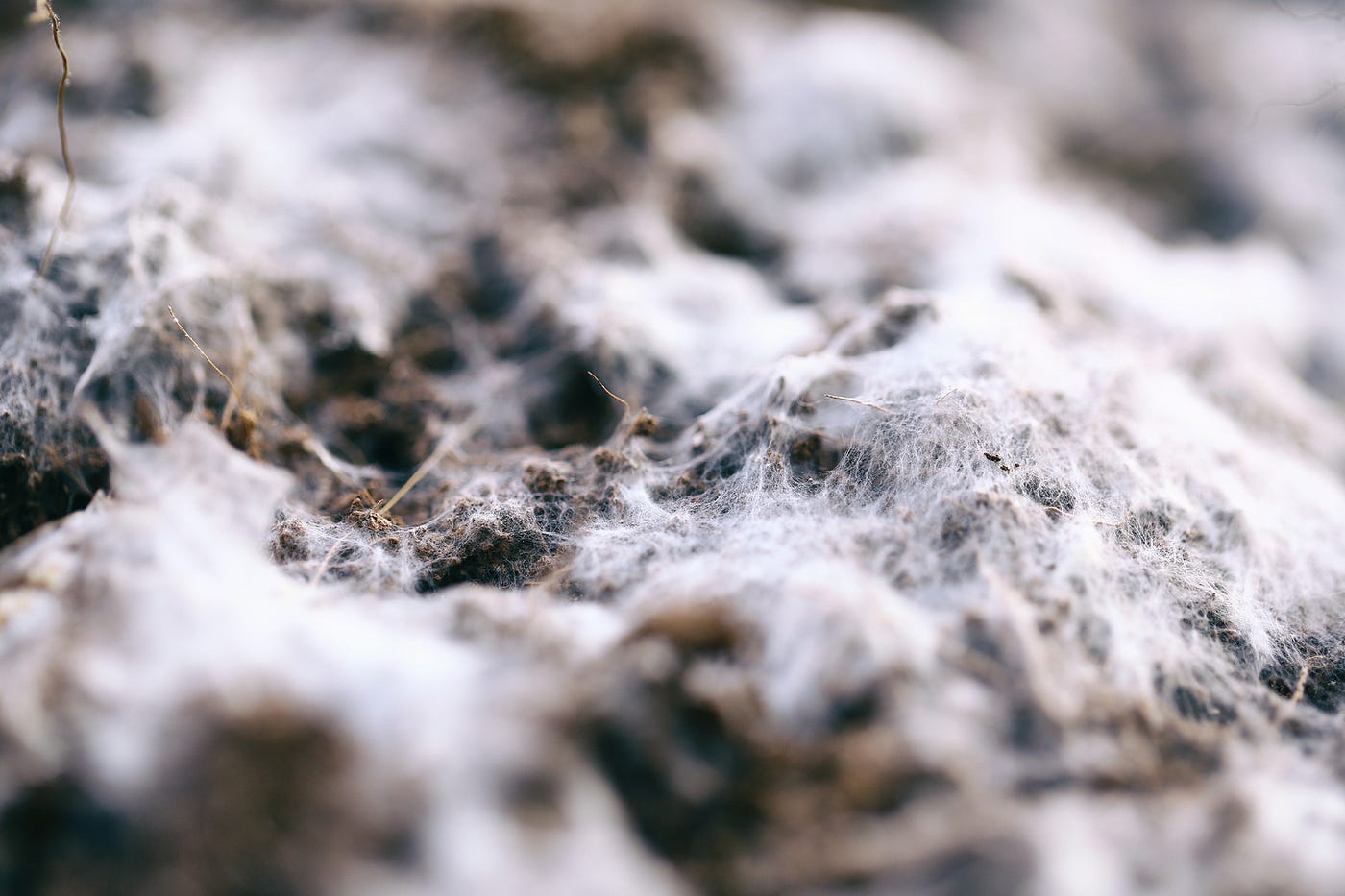
Like an iceberg, the visible portion of a fungus is only a small fraction. Below the surface, it develops white thread-like roots called mycelium. These are extremely thin and develop in all directions, creating a reticulated net that grows very fast. When planted in the right substrate, mycelium behaves like glue, binding that substrate and transforming it into a solid block. When creating products for construction, this substrate usually is agriculture waste like sawdust, residual wood, hemp or straw. Mycelium serves as a load transfer medium between a fibrous substrate, in a similar way to the matrix phase of a polymer composite. The mixture of substrate and mycelium can be molded into any shape, like plasticine. Up until now, it has been used as packaging material by Dell and Ikea, as faux leather by Hermès and the possibilities for building are slowly being explored and tested. One option are bricks, as shown in the short video below.
Because of their mechanical behavior, mycelium-based materials are seen as a possible solution for all non-load bearing building elements, such as insulation, furniture, partitions and even flooring if treated with a proper soy-based resin. Mycelium offers several advantages over synthetic materials like its low cost, density and energy consumption, in addition to biodegradability and low environmental impact. Because of its porous structure, it has great thermic and acoustic insulation properties, and is a natural fire retardant (which means it does catch fire, but just not as fast as polystyrene and polyurethane foam, for example). Other applications for mycelium include composite boards, which could replace MDF just without the extremely toxic formaldehyde and other VOCs these wood by-products contain.
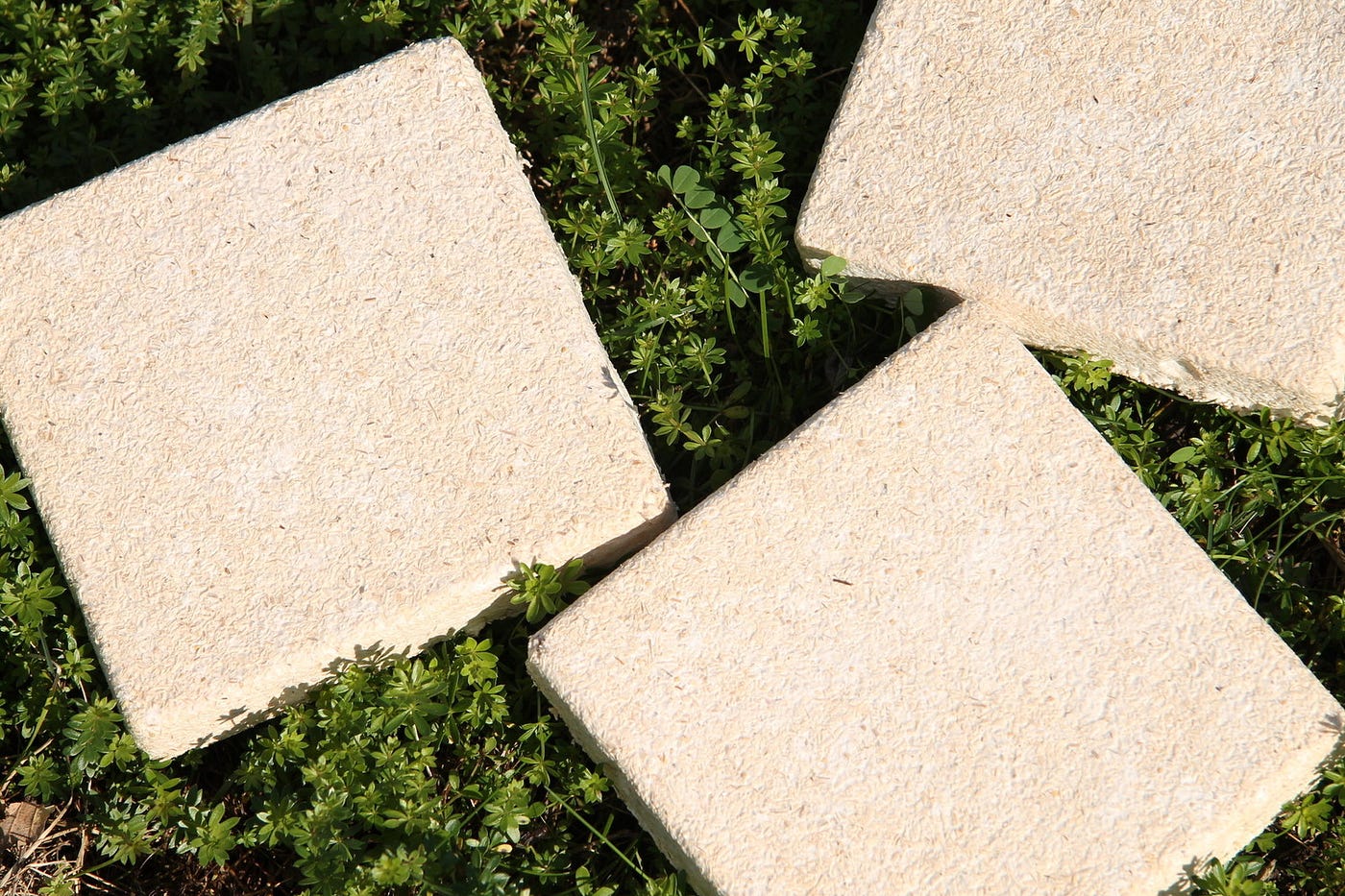
Using mycelium can hugely reduce our reliance on fossil fuels, the embodied energy in construction materials and total elimination of building waste. Although its use in the construction industry is still in a developing stage, fungal architecture definitely represents step forward towards fostering a more circular model of building whilst reducing production emissions and waste by-products.