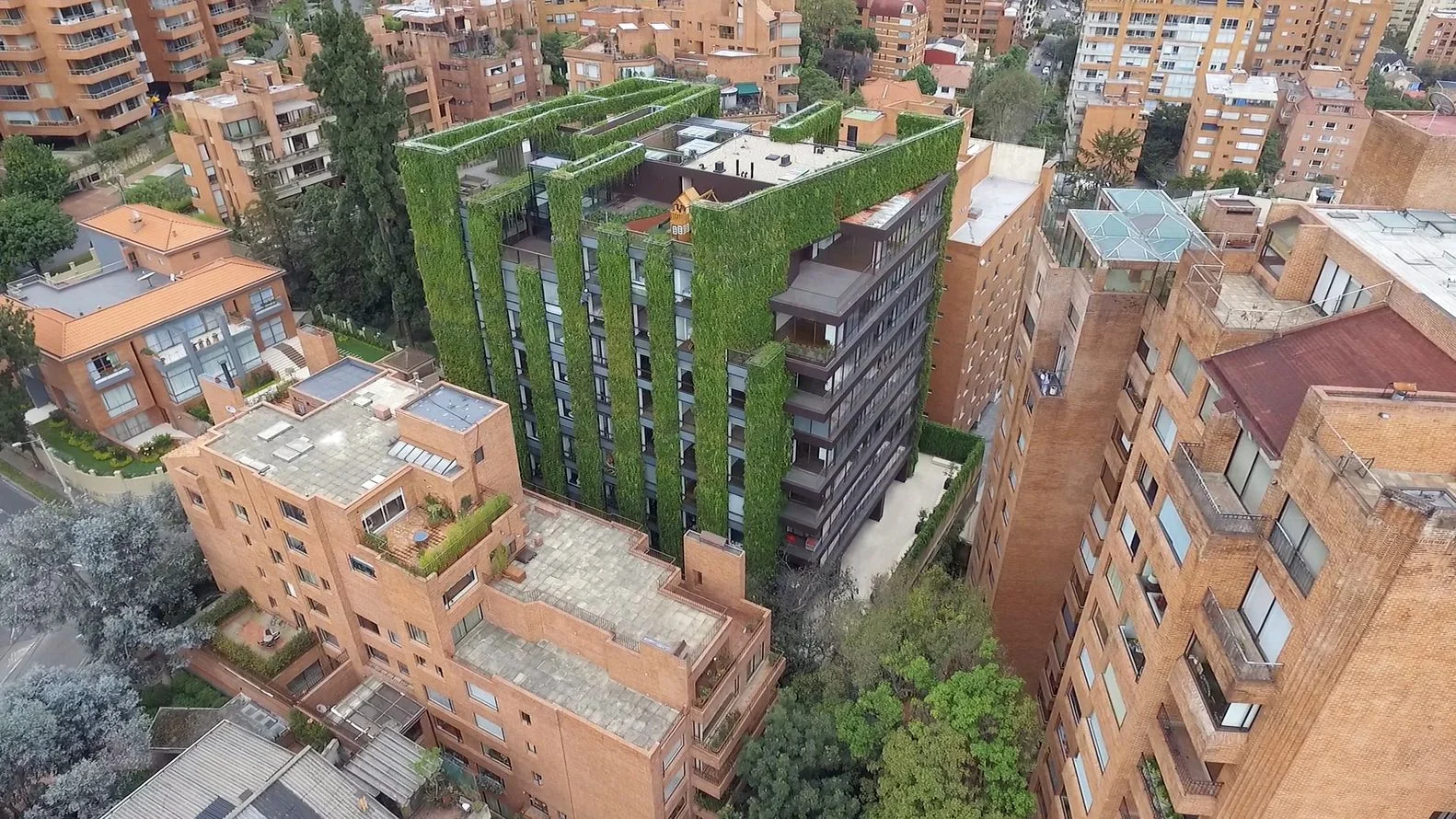
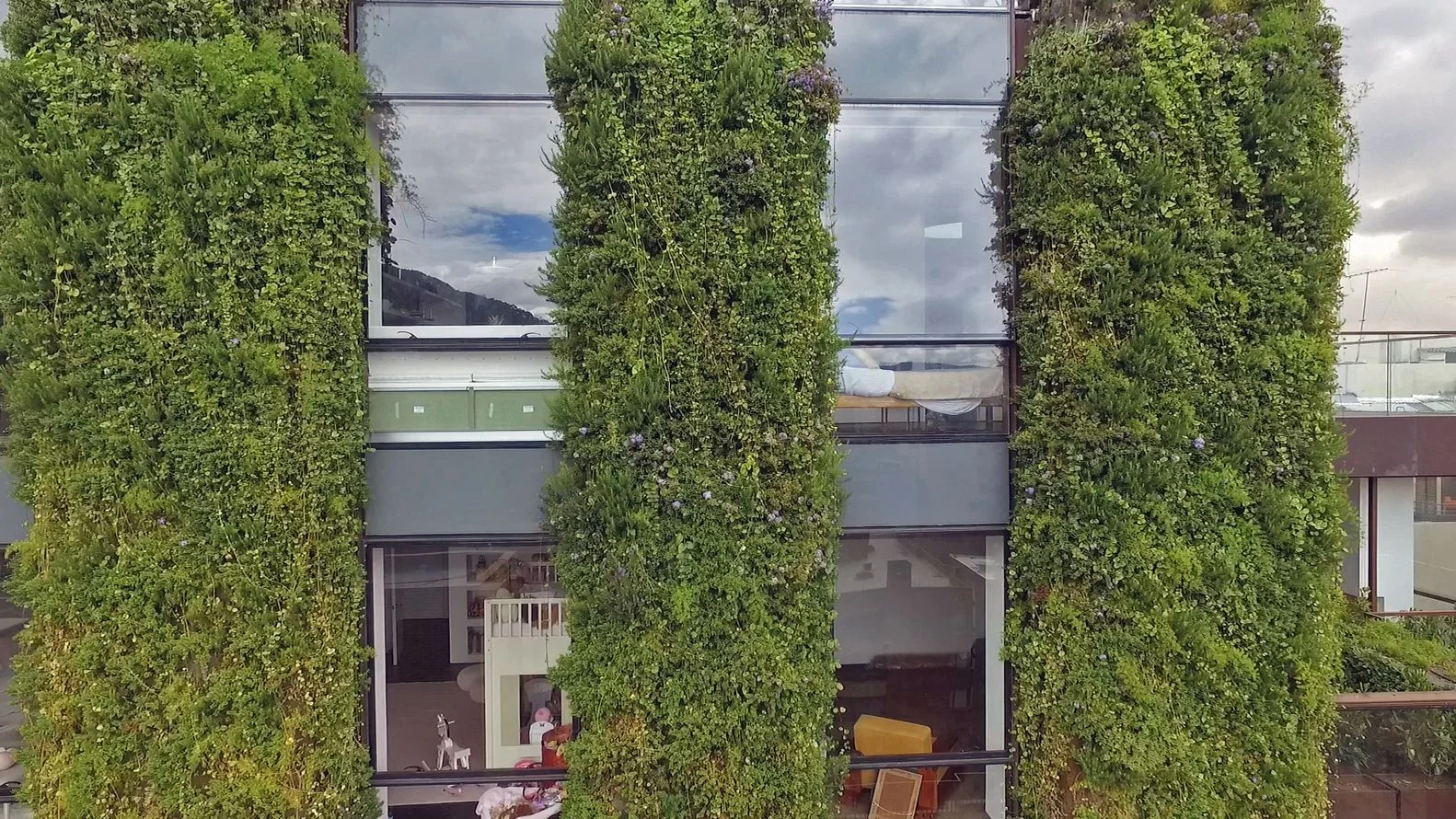
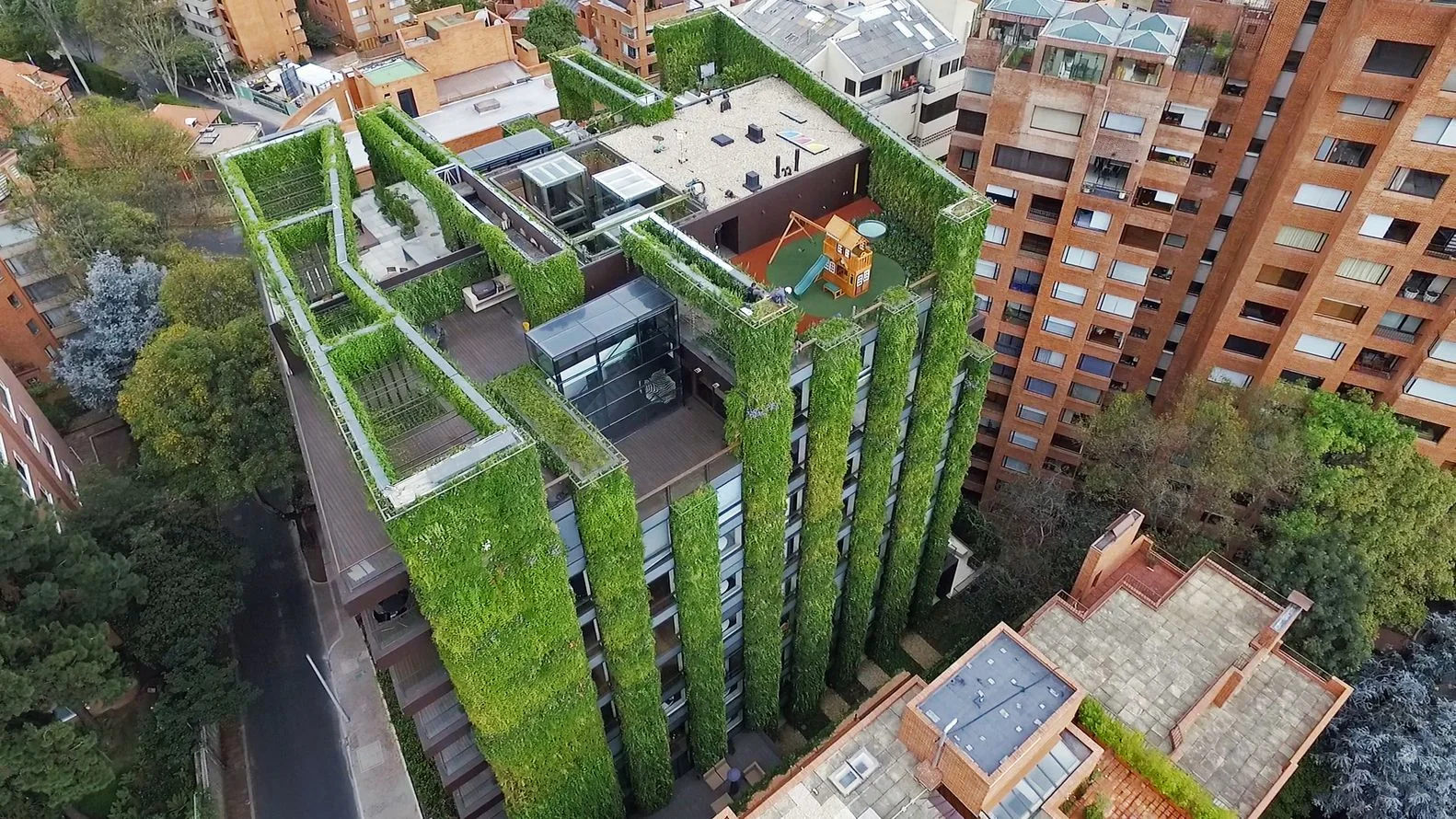
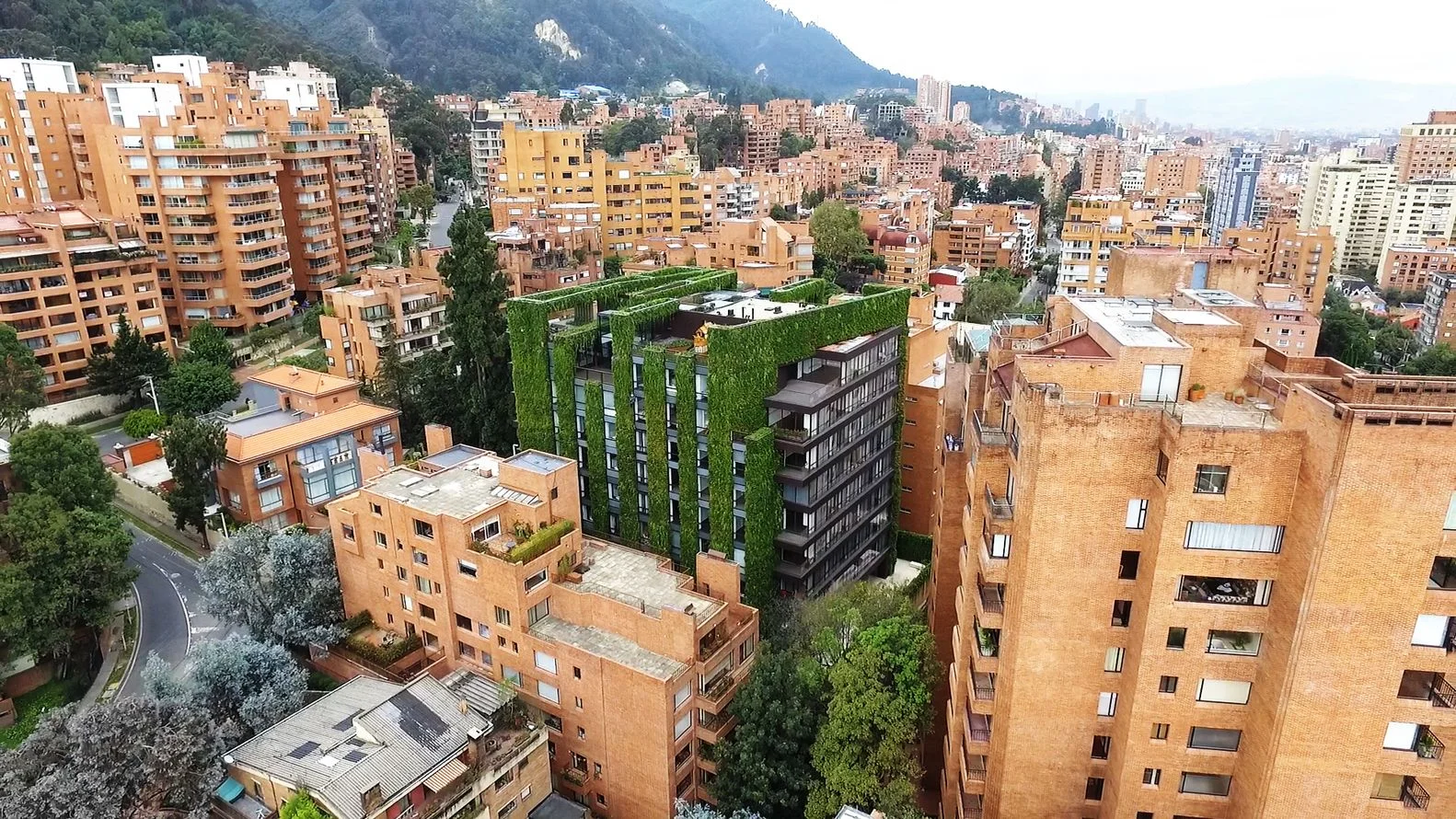
A vertical garden may seem like simply putting plants on a wall but it goes much further, particularly the one in Santalaia Building. Paisajismo Urbano, the installers of the vertical garden, tell us it’s not a gardening system but a system of applied biology, based on inter-species knowledge and knowing how plants work. The whole installation hosts more than 100 000 plants and every species was carefully placed to optimize the interaction amongst plants, funghi and bacteria. The selection of those species was defined by the climate, geographic location and orientation of each wall.
A very particular flower that feeds a hummingbird that was in danger of extinction was placed in the vertical wall. Now, this building is the largest hummingbird watching area in the country and the species is no longer in danger of extinction. This makes the Satalaia Building a heart-warming example of regenerative design. Further benefits of the largest vertical garden in the world is that its 3100m2 surface produces enough oxygen for 3100 people, and it annually absorbs 403kg of dust, filtrates 2077 tons of hazardous gases and traps 837kg of heavy metals.
The plants are watered with rainwater that the cultivation system itself recycles. The centralized and computerized irrigation system controls the levels of nitrogen, phosphorus and potassium fed to each plant and lets you know through everything that is happening at all times through a monitorization system.
All this recipe is applied to an irrigation system that works in a totally centralized and computerized way so that you can know everything that is happening in the wall at all times. The project should have taken 8 months, but because it was such a challenging project and it rains so much in Bogotá, it took almost twice as long. The thoroughness and accuracy invested in this project clearly shows and has brought us the world’s largest vertical garden and one of the biggest examples of urban regeneration.