The concepts of sustainability and innovation fuse and take the shape of an intelligent, vertical garden. Co-mida is one of the latest projects of the Institute of Advanced Architecture of Catalonia (IAAC) and it brought us the prototype of a clay 3D-printed vertical modular garden that not only produces food for the community, but also generates energy. CO-mida has been one of the 7 winning projects of Ciutat Proactiva 2020, a call for urban innovation launched by the Municipal Foundation BIT Habitat Barcelona to address the new challenges of urban inclusion and sustainability in the context of Covid-19.
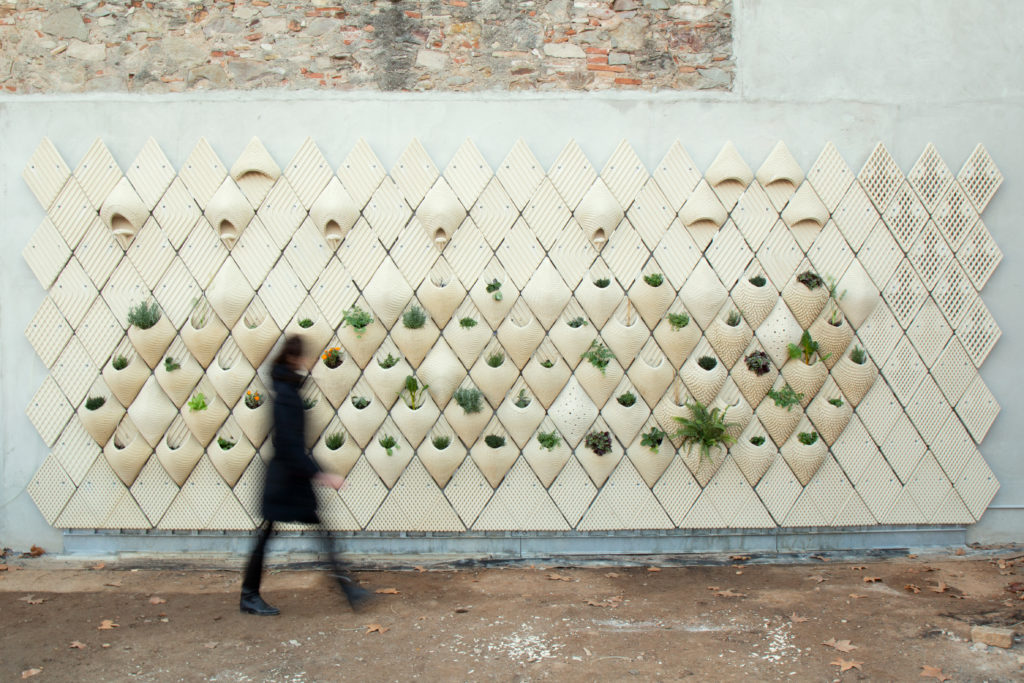
One of the objectives of this project was to create a solution that allows urban re-naturalization even in areas with no horizontal surfaces available, as is the case of dense urban areas. The garden contributes to air quality improvement, noise reduction and thermal insulation for the buildings -which subsequently leads to decrease in energy demand-. The system is thought for the cultivation of aromatic and edible plants, to enhance the philosophy of self-sufficiently that’s increasingly being sought after the pandemic, all while restoring the surrounding biodiversity.
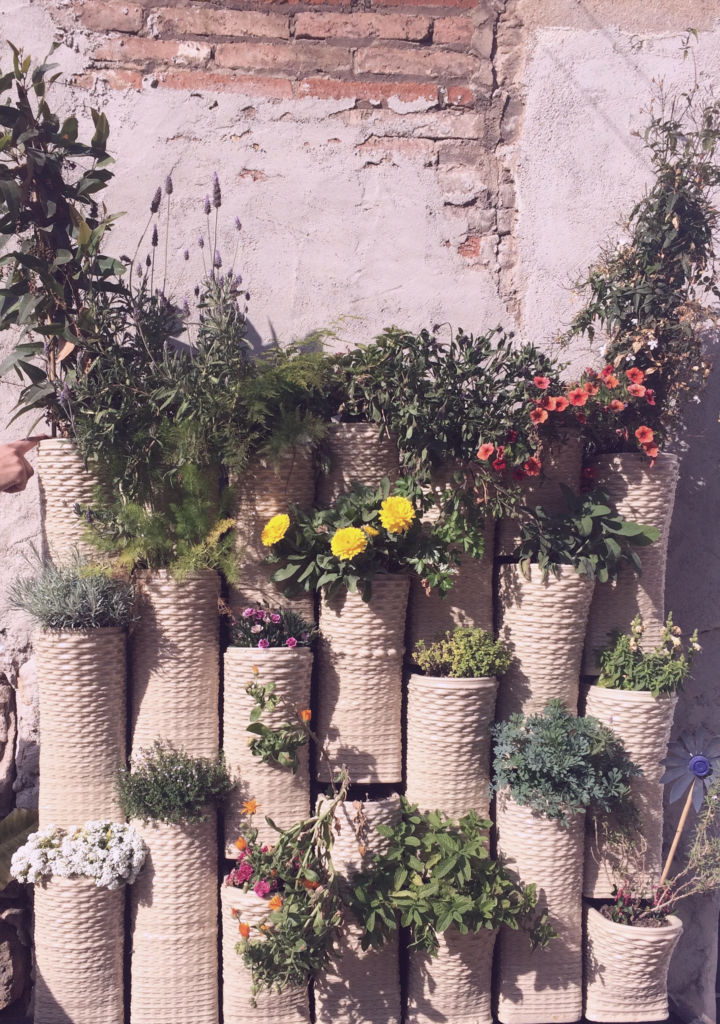
Clay, the chosen construction material, is a natural, low-impact material that can easily adapt to any climate. Cooked at low temperature it turns into ceramic, making it highly durable and resistant. Another cool fact about this low-impact material is that it is compatible with one of the lowest-impact construction techniques: 3D-printing. This technology is very precise, highly scalable and makes CO-mida simple to adapt and replicate in other parts of the world.
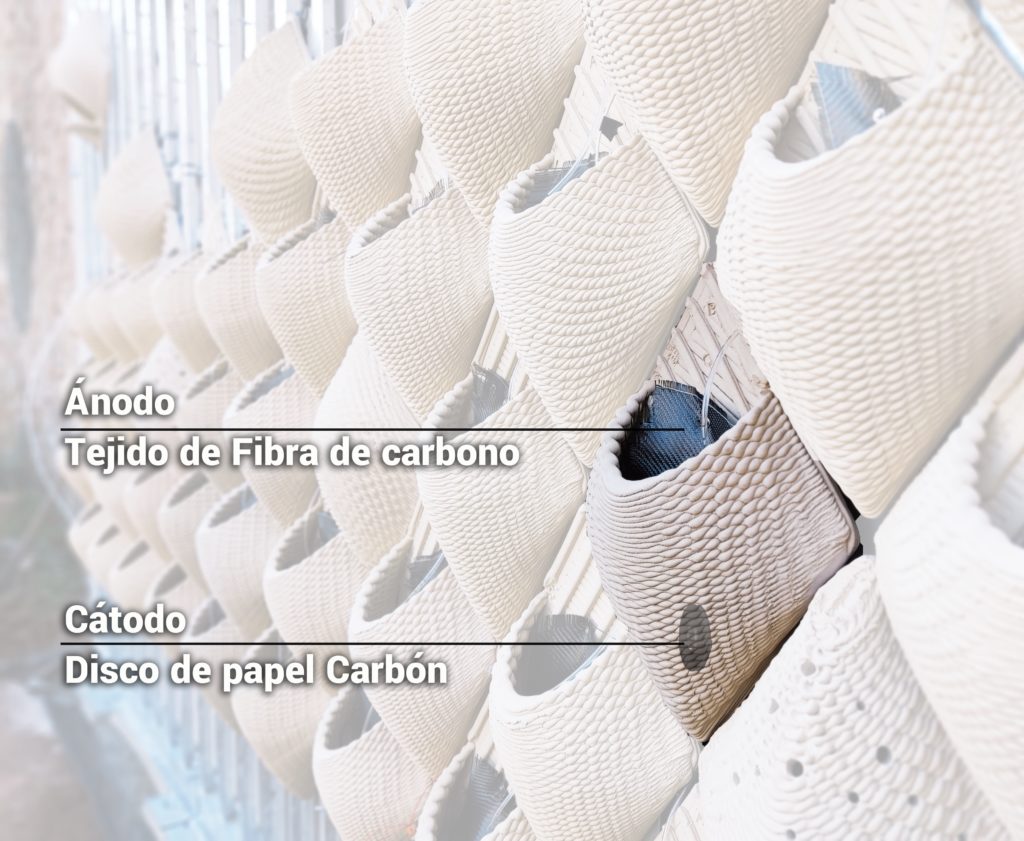
We mentioned previously that this 3D-printed clay structure generates electricity. Now, how would that work? This technology is called bio-photovoltaic, and it produces energy directly from the bio-activity of the soil. The bacteria that live in the printed earth obtain nutrients from the plants and metabolize them, releasing hydrogen. A hydrogen atom is composed by one proton (positively charged particle) and one electron (negatively charged particle). Each of the cells or modules of the vertical garden incorporate an element that acts as an anode and another that acts as a cathode, and combined with the electrons captured from the hydrogen molecules, it creates an electric circuit that allows to generate electricity. This energy is used to power the sensors that help monitor the vertical garden.
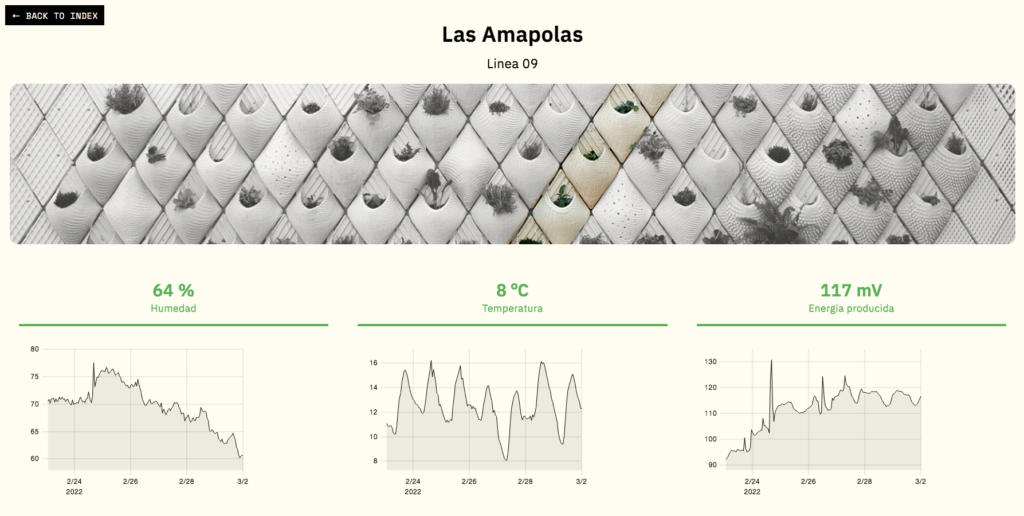
A WebApp has been develop for the community management of the vertical garden. CO-mida App is based on the Smart Citizen Kit system, which is a project that develops different sets of sensors intended for real-time environmental monitoring. CO-mida includes one humidity and one temperature sensor per row, and these sensors send information to the users regarding the state of the plants and the quantity of bio-photovoltaic energy produced.
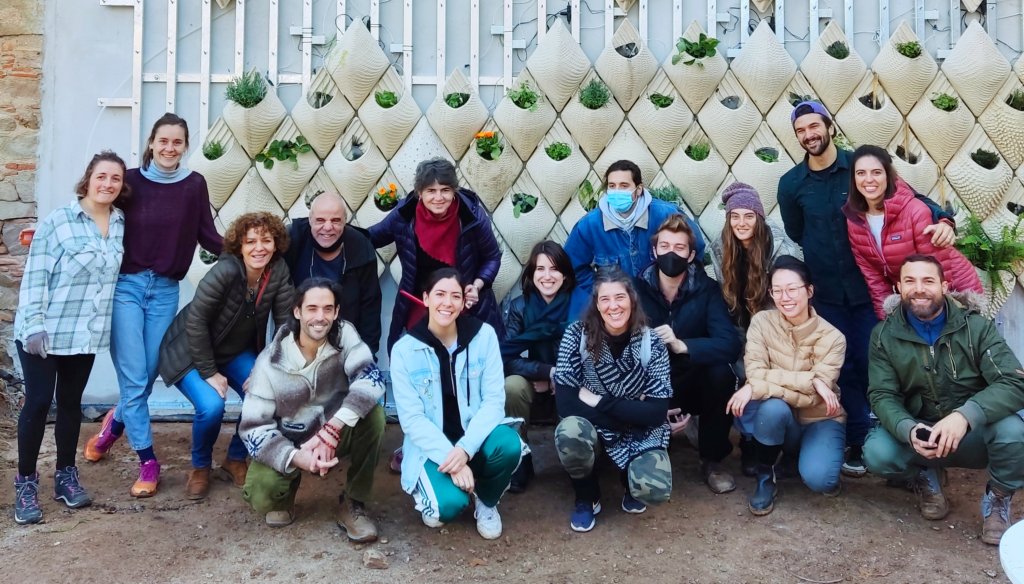
CO-mida also aims to be a community booster. An urban vertical garden presents the chance of strengthening community bonds, so this project explored the different opportunities to enhance relationships between people. Neighbors and users actively participated in the development of the project, from the design process, to its construction and cultivation, and the subsequent maintenance. Some even participated in a 3D-printing workshop to further understand the technologies involved in the project!
Re-naturalizing urban spaces allows for users to experience first-hand the numerous health benefits of being surrounded by vegetation. It raises awareness in a very direct way of the air quality improvement, the blooming biodiversity and the beneficial psychologic effects it has on us. As CO-mida grows edible crops, the project wanted to take the chance of raising awareness about healthy eating. Several workshops on sustainability and nutrition were carried out for different collectives such as children, challenged people and groups of students who frequent the area at lunch time.

CO-mida has been developped in line with Barcelona City Council’s commitment to reduce greenhouse gas emissions by 40% by 2030 and to increase 1.6 km2 of urban green space as a measure to adapt to climate change. This new model of vertical garden aims to contribute to the construction of a de-globalized scenario and to achieve more self-sufficient, sustainable and resilient local production models.
Project: CO-MIDA: Green urban elements for the co-production of food and energy
Partners: Institute of Advanced Architecture of Catalonia (IAAC), Asociación Sun Sun Love (ASSL), Asociación Taula Eix Pere IV (ATEP IV)
Website: https://iaac.net/project/co-mida-en/
Location: Jardín de Las Mariposas in Barcelona, Spain