
he biggest innovations don’t always call for fancy technologic developments, sometimes the solutions we’re looking for can be closer to us than we realize. I’m talking about funghi and its recent appearance as a construction biomaterial.
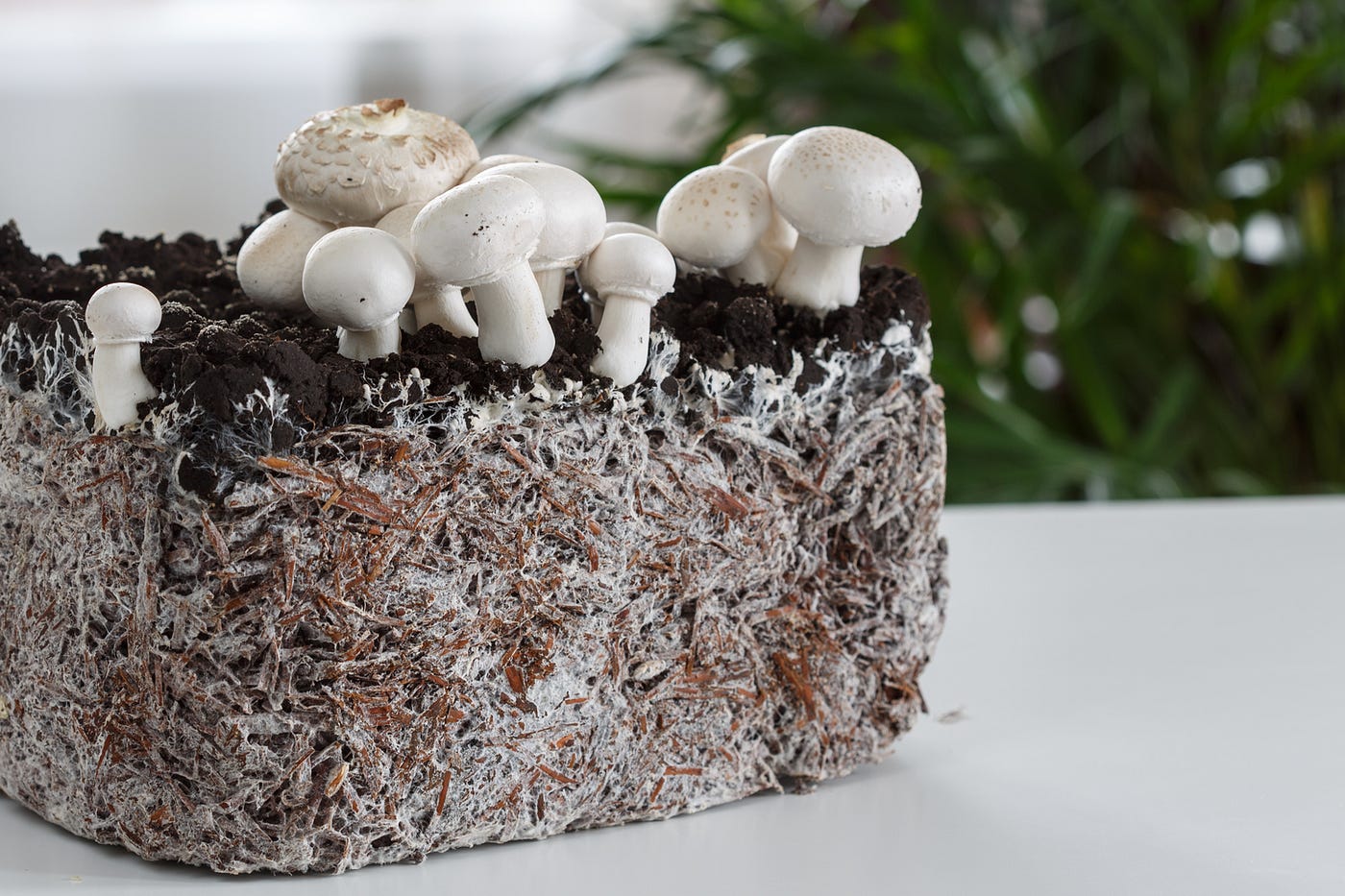
Mycelium are the thin root-like fibers from fungi which run underneath the ground. Combined with a substrate made from agricultural waste, these roots grow into it binding the whole mixture together and allowing us to shape it in any way we like. Although it is still in a very early stage as a construction material, here are three examples of real-scale application mycelium buildings.
Hy-Fi


Built by David Benjamin (architect of The Living) and exposed in the MoMA’s courtyard in 2014, Hy-Fi was the first large scale structure constructed in mycelium bricks. It used a technique developed by Ecovative in 2007 which had only been used, until that moment, to make packaging material. The bricks were grown in 5 days but weren’t sterilized, so they were stacked in the shape of merging cylinders and let grow together. The steel bricks at the top are actually de molds used to grow the bricks and they symbolize New York architecture, where low-rise brick structures are towered by shiny skyscrapers. This exposition was only temporary and when it ended, bricks were composted and the molds were returned to the company 3M to continue research on this biomaterial.
Growing Pavilion
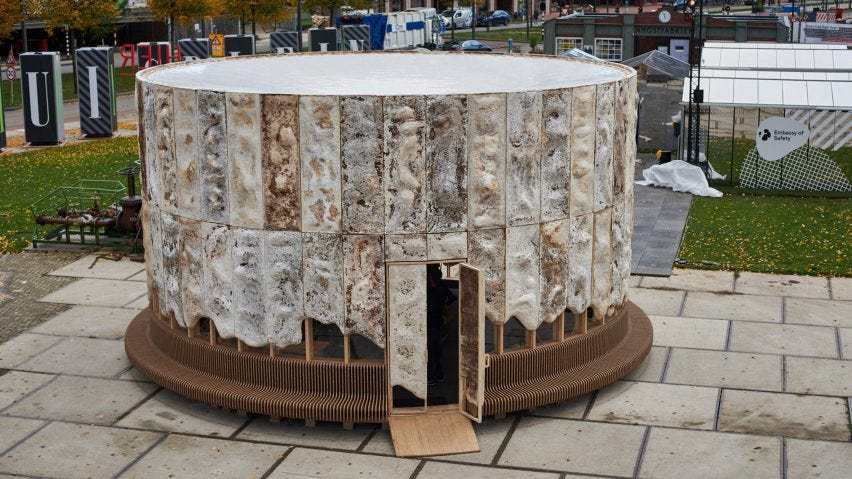

Designed by Pascal Leboucq in collaboration with Biobased Creations, this pavilion was a temporary events space at Dutch Design Week 2019 built entirely from bio-based materials. The exterior panels are grown from mycelium and treated with a coating that is a bio-based product originally developed by the Maya people in Mexico. The panels are supported on a wood frame that could be disassembled, the floors were made from cattail (a type of reed) and benches are built out of agricultural waste.
Shell Mycelium Pavilion
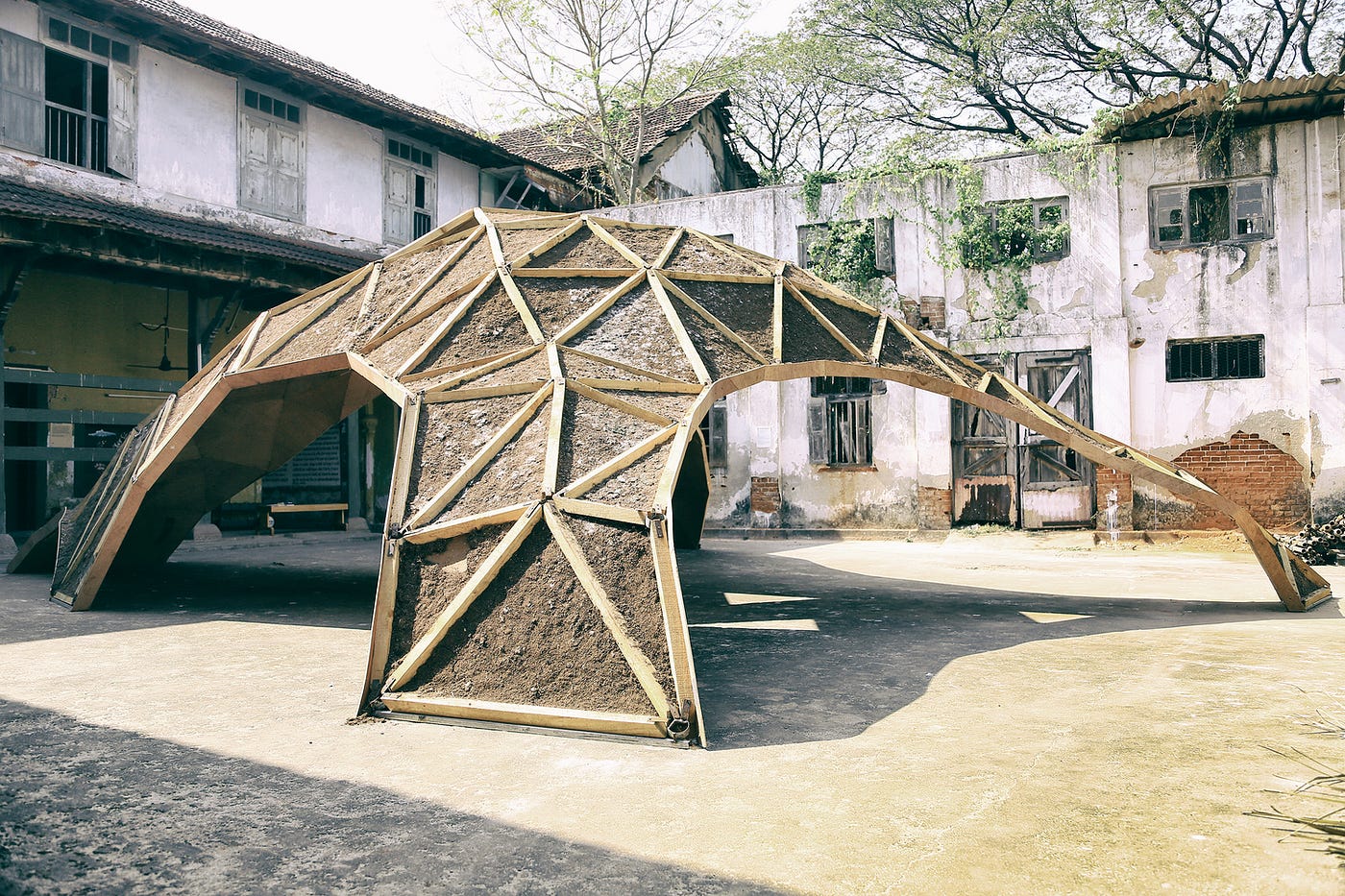
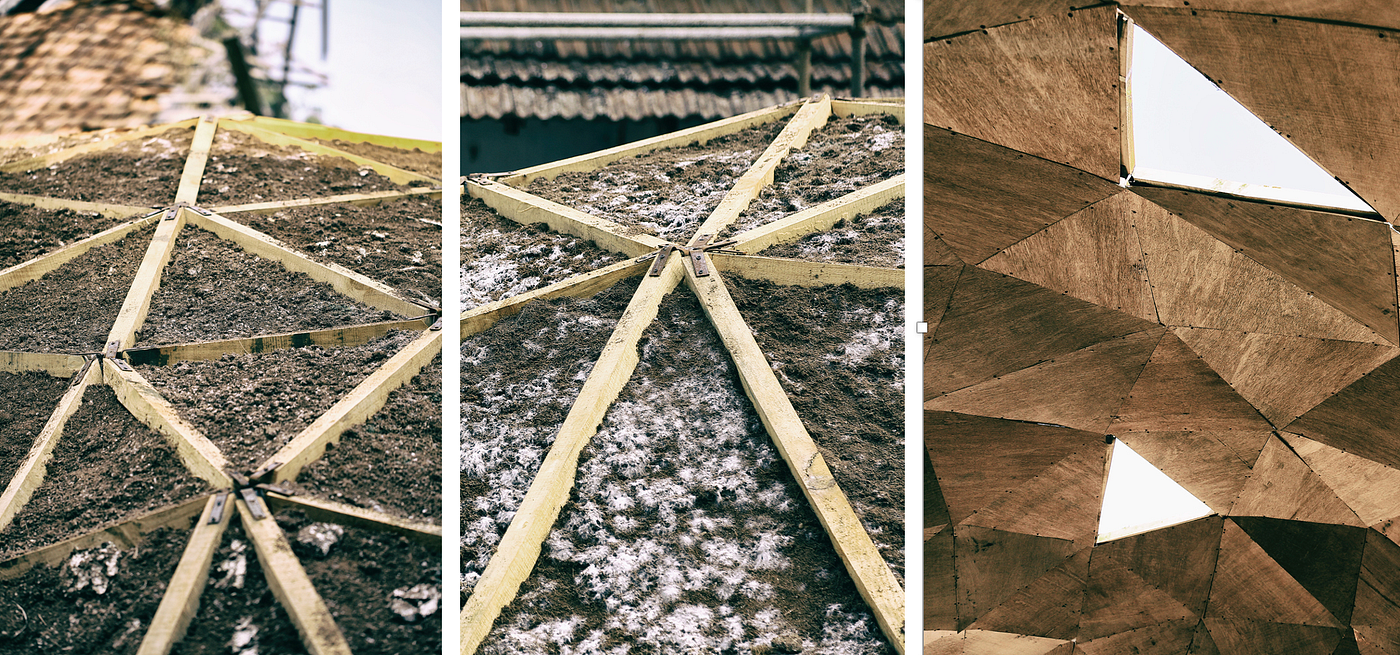
This construction was part of a manifesto towards a more critical take on temporary constructions. Built by BEETLES 3.3 and Yassin Areddia Designs as a part of the Kochi Muziris Biennale 2016 in India, the designers said “We criticize these unconscious political choices, with living buildings, that arise from nature and return to nature, as though they never existed.” The project pointed out how using an biomaterials like mycelium for major events could prove to be cost-effective and much more sustainable, as it is inexpensive and leaves no waste by-products behind.
Although we just went through some examples, mycelium construction is still scratching the surface. Articles on the subject usually conclude that it still need research and experimentation in order to build a real competitive and scalable material that can be massively produced. The great potential of mycelium, though, is undeniable and represents the shift towards circular building.


1 thought on “Springing Up Like Mushrooms”
Good site you have here.. It’s difficult to find quality writing like yours these days. I truly appreciate people like you! Take care!!