Energy Campus Leeuwarden

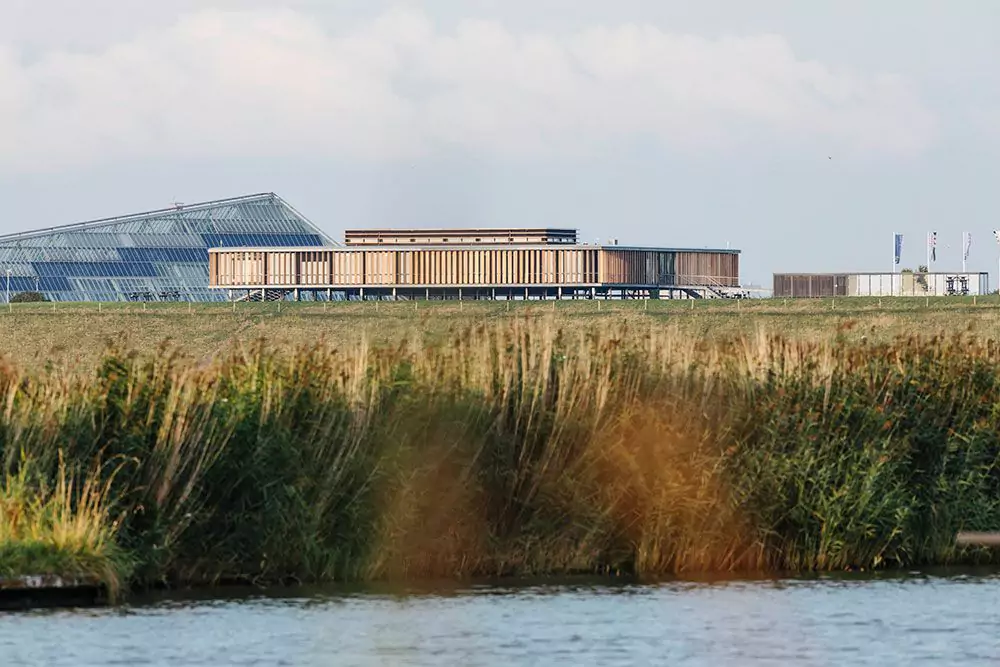
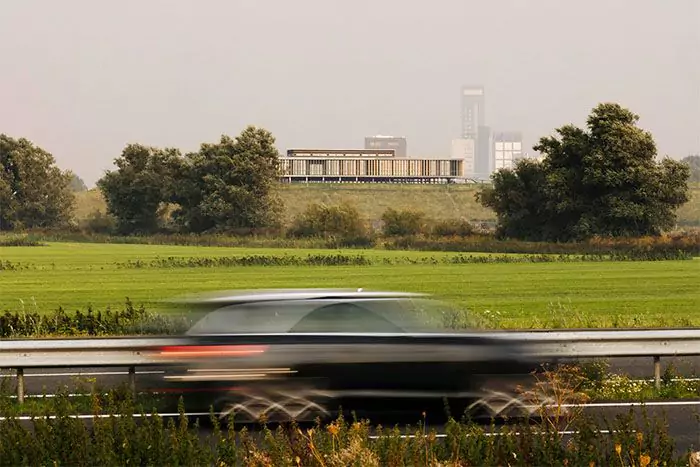
This environmentally sustainable and circular office is more than just a building. It is a meeting place and platform for renovation and innovation in today’s energy issues. The Energy Knowledge Center is located on a former landfill site, in the middle of the new Energy Campus Leeuwarden. This building is part of the campus and works as a knowledge center for development and innovation in the sustainable energy field.

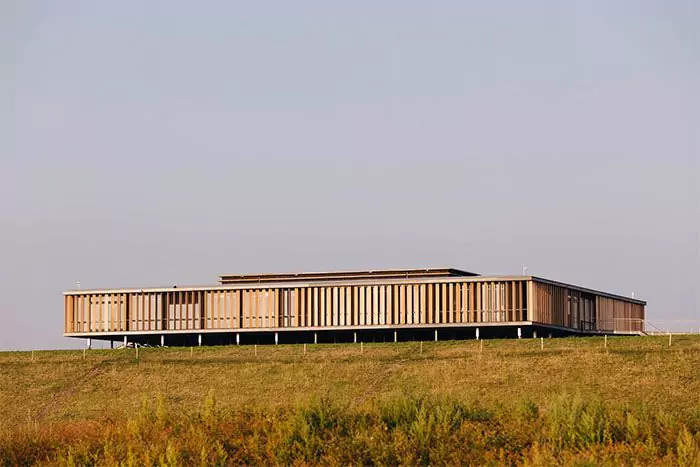
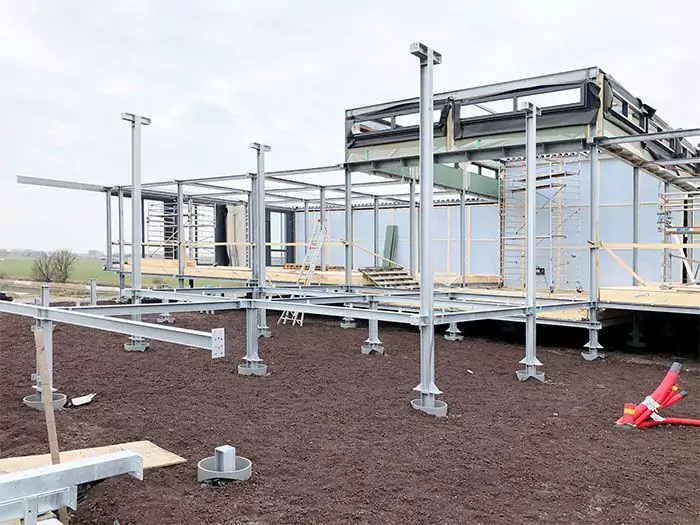
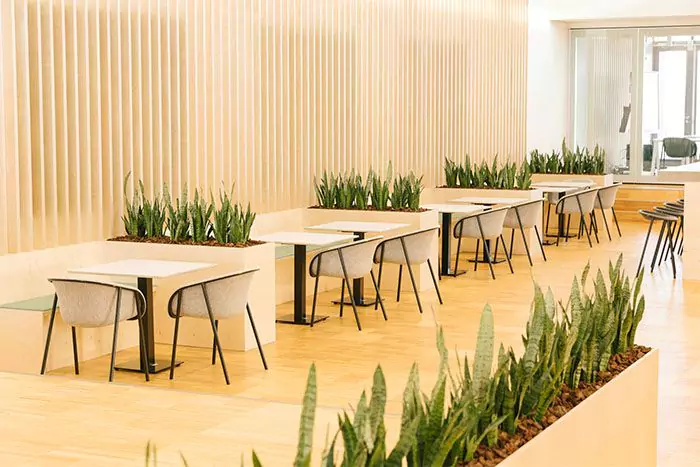
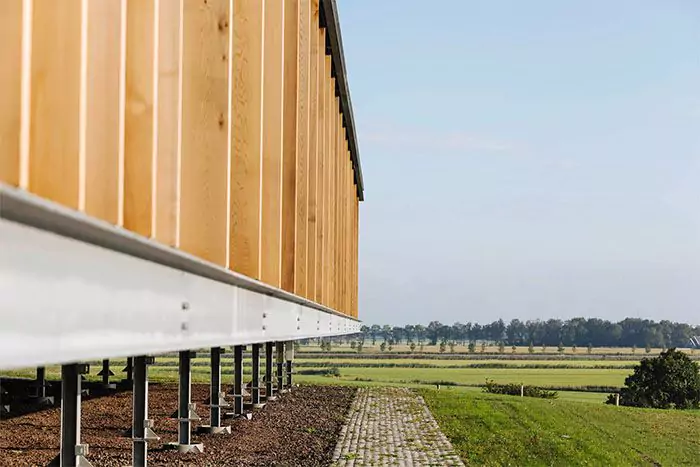
One of the conceptual pillars of this project was circularity. The construction is placed on 108 individually adjustable columns. For one, this prevents damage to the building if the former garbage dump were to move or subside, reduces the footprint surface and makes the building dismountable. Having it elevated 1,5m from the floor additionally gives it a pleasant pavilion-like aesthetic. Keeping circularity in mind, materials were carefully selected putting special attention to re-use. Thanks to the use of solar panels and heat pumps, the building is completely energy neutral, and the polluting gasses emitted from the former garbage dump inside the hill are collected and used for heating. Other features that have been taken into account to further reduce environmental impact, are the flexible indoor layout and the simple expandability if it were to be expanded in the future.

The Energy Knowledge Center is the first of its kind and shows how buildings can not only aim for low environmental impact but can also help regenerate environments that have been depleted by mankind.

Architecture: Achterbosch Architecten

Images: Tristan Fopma

Year: 2017

You may also like

Can AI and Sustainable Construction Truly Coexist?

The rise of artificial intelligence in architecture is being a fascinating journey, filled with promise but also with pressing questions about sustainability. AI has the potential to reshape how we design, model, and plan our built environments. Yet, there’s still an unsettling issue to be resolved: the immense energy demand of AI systems. Can we truly integrate AI into sustainable construction, or are these two concepts fundamentally at odds? A couple of months ago I came across a post by Patric Hellermann on Linkedin, and learned about a

Read More »
""

Could craftsmanship be the mother of industrialization?

In the age of super-technified materials, digital architecture and industrialized construction, what room is there for craftsmanship in a technological world? The sustainability trend – or should I call it inherent professional responsibility – of the global building stock advocates for buildings that are more connected to their context and that contribute to environmental, social and economic well-being (AKA complying with the 3Ps). Vernacular techniques and local materials have gained relevance along the path to meet this goal, but is it really feasible to apply these concepts to

Read More »

Tackling Climate Change One Building At A Time

Climate change is a catalyst for profound economic and social shifts, intensifying existing challenges such as political instability, income inequality, and infrastructure strains. While it’s challenging to attribute any single event solely to climate change, it is clear that rising global temperatures and environmental shifts aggravate vulnerabilities in societies already facing issues like inadequate infrastructure, automation, and demographic shifts. As a slow-moving but transformative force, climate change amplifies these pressures, highlighting the urgent need for robust adaptation and mitigation strategies. But what is climate change? The weather can

Read More »

Leave a Comment

Your email address will not be published. Required fields are marked *

Scroll to Top