EE Residence

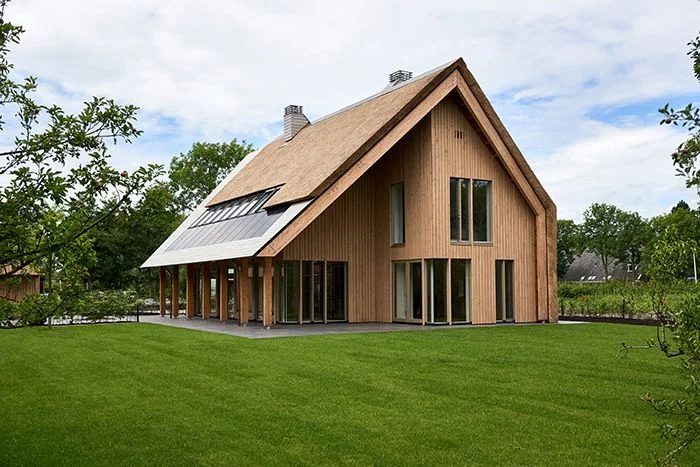
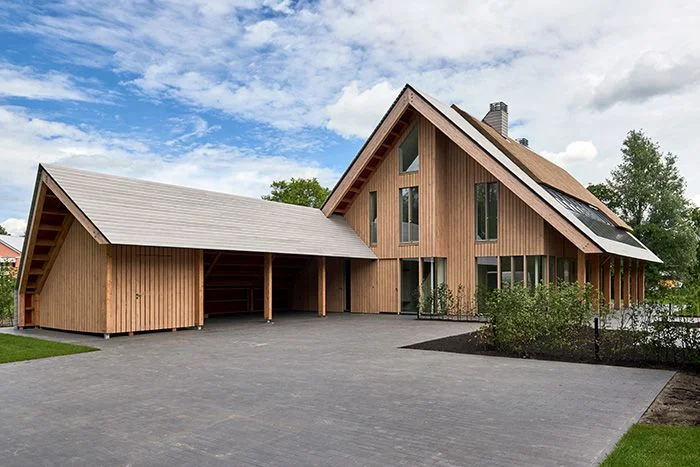
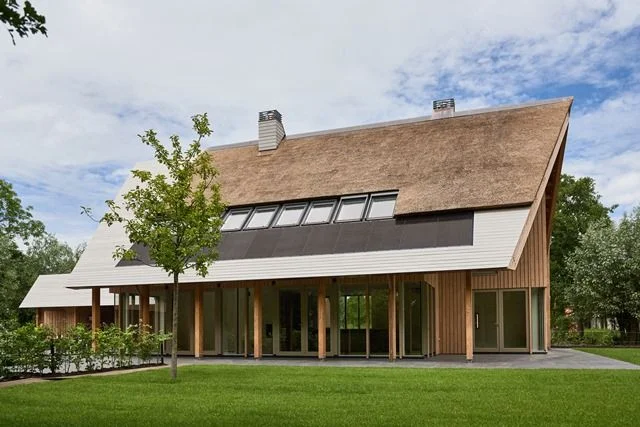
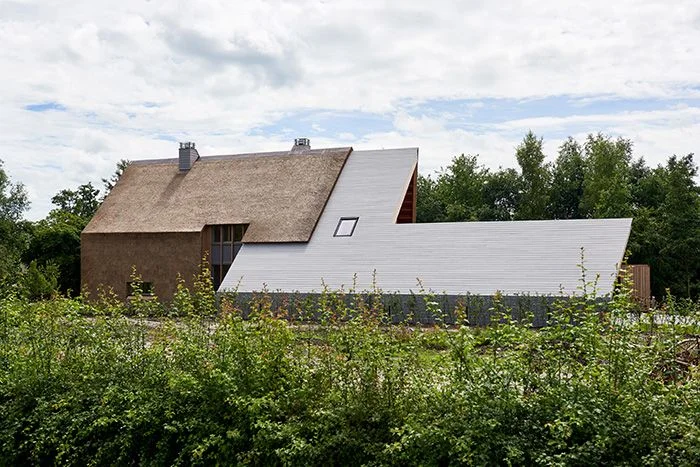
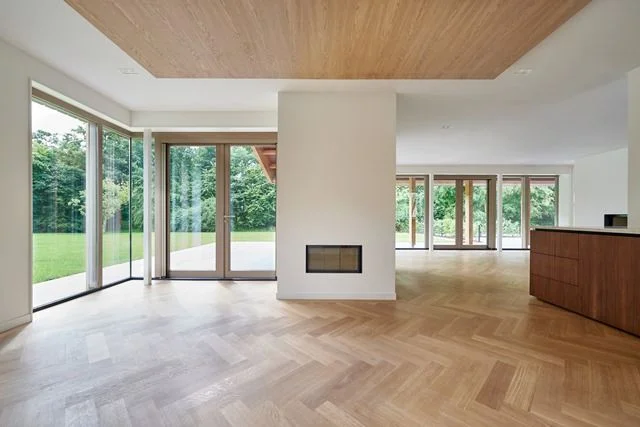
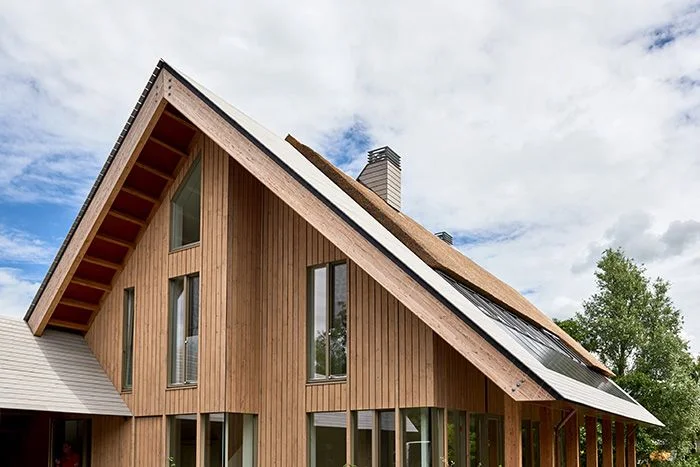
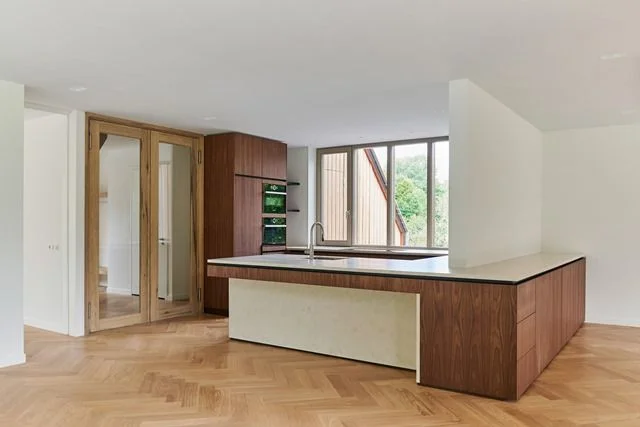
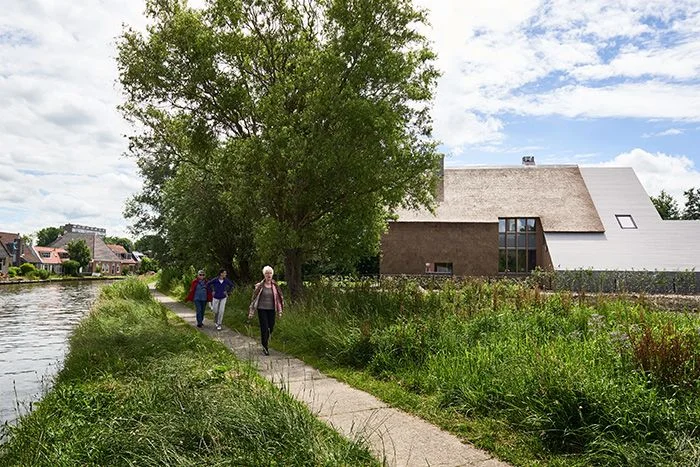
Located in the outskirts of the Frisian city Leeuwarden, near the river EE, we find the EE Residence. This energy-neutral house is the result of location-specific design, with shape and materials that evoke the typical Frisian farm barns. Local and durable materials have been used in order to reduce environmental impact, such as Frisian straw for the roof and dutch oak for the stairs and flooring. The large amount of glass of the south-facing veranda ensures optimal use of solar heat in winter and the overhangs offer protection and natural ventilation during the summer.

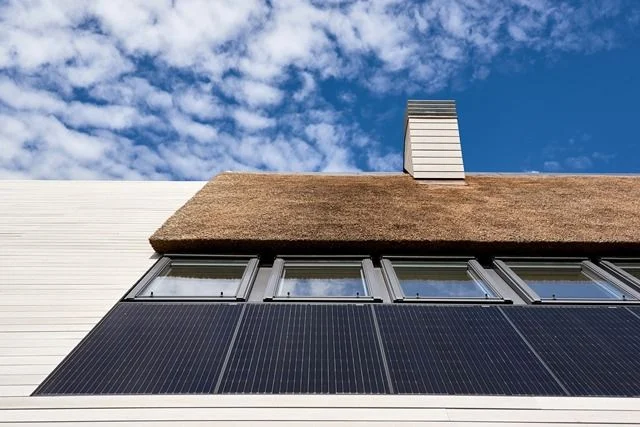
The north side of the house provides more privacy and greater protection to the microclimates that are usually created on this side of buildings. The roof follows function and enwraps the whole house like a blanket. You can also find solar panels sunk in it that cover the energy demand of EE Residence all year around.

This project is a great fusion between modern technologies that allow it to reach energy neutrality and ancestral shape and materiality that pay tribute to the forgotten craftsmanship in wood constructions.

Architecture: Achterbosch Architecten

Images: Ronald Zijlstra

Year: 2017

You may also like

""

Portland Cement: the Scapegoat for Construction Excesses

Ordinary Portland cement is available worldwide and has become the most widely used material in construction. Engineers have been educated in its use not only for civil engineering but also for building and construction, and guidance for its use is widely available. During the past years, with society’s developing conscience on sustainability, lots of fingers have been pointed towards Portland cement because of its tremendous environmental footprint. Despite this, one must admit that the popularity of this material is one that has been well earned because of many

Read More »
""

Reconnect with Nature and Improve Your Health with Biophilic Design

If I asked you to close your eyes and imagine yourself in a relaxing environment, odds are that the environment you just picked incorporates several natural features like the presence of plants, the sea and its gentle breeze, a fireplace with its crackling sound, … You’ve most likely heard before that humans are instinctively drawn to nature. Biophilia describes this innate human-nature connection. Biophilia is being introduced into buildings through biophilic design, a practice that uses nature-inspired design methods to awaken our inherent affinity to nature to make us feel emotionally

Read More »
""

Biohabitability: The Awaiting Revolution

Biohabitability is a discipline that studies, measures and evaluates the environmental factors that impact our health. Biohabitability describes spaces that achieve to be livable from a human biology point of view. Applying biohabitability is all about learning how our organism works and applying it to our indoors to obtain biotic spaces. The technological advances made in construction during the past decades have, accidentally, been working in the opposite direction. This has raised the need to bring forward biohabitability in our built environment. “Health is the unit that gives

Read More »

Leave a Comment

Your email address will not be published. Required fields are marked *

Scroll to Top